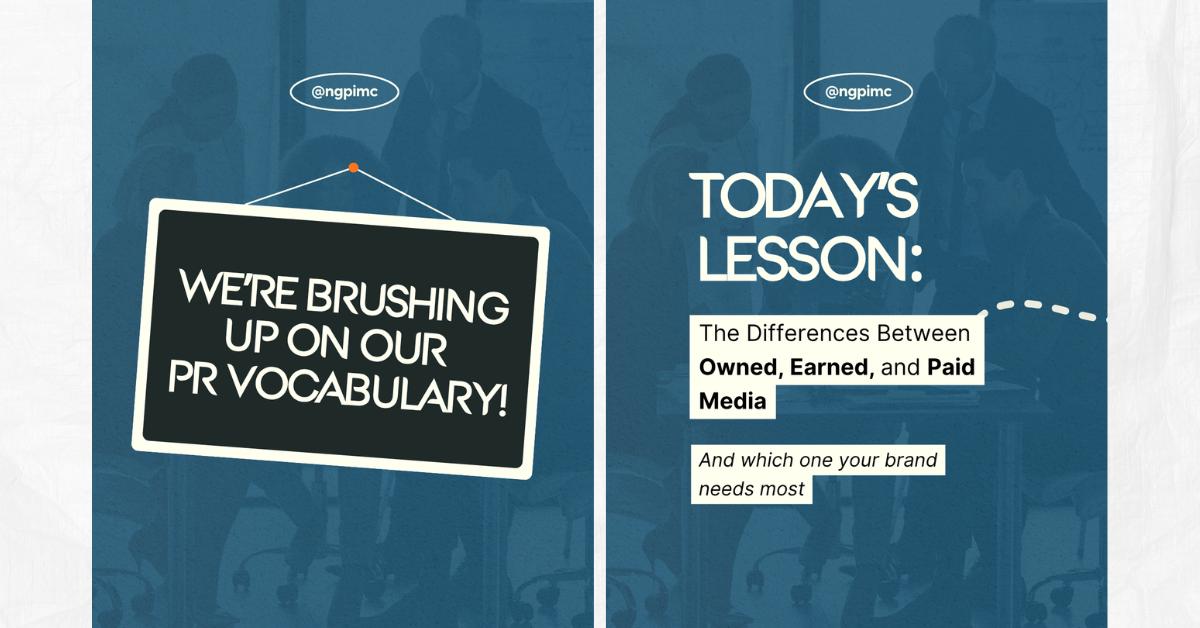
You’ve probably encountered these terms before especially in marketing or PR discussions, but what do they really mean and why do they matter?
Owned, earned, and paid media play distinct roles in shaping a brand’s visibility. These three media types represent different ways brands share their stories, build credibility, and connect with their audiences.
Understanding how they work is key to creating a well-rounded communication strategy. Each plays a unique role, but when used together, they can significantly strengthen a brand’s visibility and reputation.
Let’s break them down one by one.
What is Owned Media?
Appier (n.d) defined owned media as somewhat similar to organic marketing. These are a set of strategies and actions carried out through the brand’s own channels such as websites, blogs, social media profiles, email newsletters, mobile applications, branded video and podcasts.
Since it is handled internally, it tends to be more cost-efficient and allows greater control over the information being shared (Tulane University, n.d). Basically, these are spaces where the brand can create and share content directly with its audience without relying on third parties.
One advantage of owned media is that it gives brands full control over their messaging. Furthermore, it supports long-term brand building through consistent communication and storytelling over time.
However, its reach can be limited without additional support from paid or earned media in amplifying visibility. To expand reach and strengthen credibility, brands must also look beyond their own channels and earn attention from others.
What is Earned Media?
But what happens when people start talking about your brand on their own?
Earned media is the attention, conversations, and buzz your brand receives from other people—most often your audience—after engaging with the content you’ve created and shared through your own channels (Today Digital, 2022). It represents the organic spread of your message as it moves beyond your direct control, appearing in news outlets, social media discussions, blogs, and everyday word-of-mouth.
Furthermore, Han (2024) notes that earned media has become even more powerful, fueled by social platforms and review sites that give consumers the freedom to openly share their experiences, opinions, and ratings.
What makes earned media especially valuable is its authenticity. It builds credibility and trust because audiences tend to believe voices outside the brand more than the brand itself. However, this credibility comes with a trade-off—brands have little control over how they are portrayed, and the outcomes are often unpredictable and difficult to manage.
What is Paid Media?
But how can brands ensure visibility when organic attention is not guaranteed?
Paid media refers to promotional content that is distributed through platforms such as social media, search engines, or websites in exchange for payment. It is commonly divided into two categories: paid search and display advertising (Han, 2024).
Paid search includes advertisements that appear in search engine results based on the consumers’ algorithm. On the other hand, display advertising consists of visual ads shown across websites and platforms, targeting potential consumers who may be interested in the brand’s products or services.
It is a paid promotional approach where brands purchase placements to reach specific audiences. It offers strong targeting capabilities through data-driven tools such as audience segmentation and media monitoring, allowing brands to deliver messages at the right time for improved visibility, reach, and engagement (Rodsevich, 2026).
Paid media often use the following channels to reach specific audience:
- Facebook/Instagram Ads
- Tiktok Ads
- Google Ads
- Sponsored posts
- Paid influence collaborations
- Banner ads on websites
- Advertorials
Owned vs Earned vs Paid
In simple terms, owned media is something you create and control; earned media is when the audience markets for you; and paid media is when you pay to be exposed. Here’s a simple table to help you distinguish between them.
| Comparison Point | Owned Media | Earned Media | Paid Media |
| Control | Full control over content and message | Little to no control | High control over placement and timing |
| Cost | Low to moderate (production cost) | No direct cost, but requires effort/PR | High (advertising spend) |
| Credibility | Brand driven | Third-party trust | Seen as promotional |
| Speed of Results | Moderate and consistent | Unpredictable, can be fast or slow | Fast and immediate |
| Longevity | Long-term | Can be short or viral-driven | Stops when budget ends |
How They Worked Together in a PR Strategy (Jollibee)
| Stage | Description |
| Create Content (Owned) | Jollibee publishes its own campaigns, social media posts, and videos (e.g., heartfelt short films and product promotions) to tell brand stories and connect with audiences directly. |
| Get Featured (Earned) | The brand gains organic buzz through viral reactions, media coverage, and word-of-mouth—especially when its ads or campaigns are shared, reviewed, or talked about by the public and online communities. |
| Amplify with Ads (Paid) | Jollibee boosts visibility through TV commercials, digital ads, and sponsored content placements to reach wider audiences and reinforce campaign messaging during key launches. |
Why you need all three
In a strong PR and marketing strategy, owned, earned, and paid media are not meant to work in isolation—they are designed to support and strengthen each other. Owned media builds your foundation and brand voice, earned media adds credibility and trust through third-party validation, and paid media ensures your message reaches the right audience at the right time. When used together, they create a more complete and effective communication ecosystem.
Balance is Key
Relying on only one type of media can limit your impact. Even the strongest content needs amplification, and even the biggest ad spend needs credibility. A balanced approach ensures that your brand is not only visible, but also trusted and remembered.
Common Mistakes to Avoid
- Over-relying on paid media without building strong owned content
- Ignoring earned media opportunities like PR, influencer outreach, or organic buzz
- Creating content without a clear amplification or distribution plan
- Treating each media type as separate instead of integrated
Understanding how owned, earned, and paid media work together is essential for building a strong brand presence. If you want to explore this further and learn how to apply it more strategically, you can dive deeper into integrated communications approaches with NGP Integrated Marketing Communications. Contact us today.